If salads have let you down before, there’s usually one reason: not enough protein. A bowl of lettuce with a few croutons on top might taste fine, but it may leave you hungry again well before lunch is over. That’s not a willpower problem. Protein can help increase fullness after a meal, and many salads simply do not contain enough of it to make them feel like a complete meal.
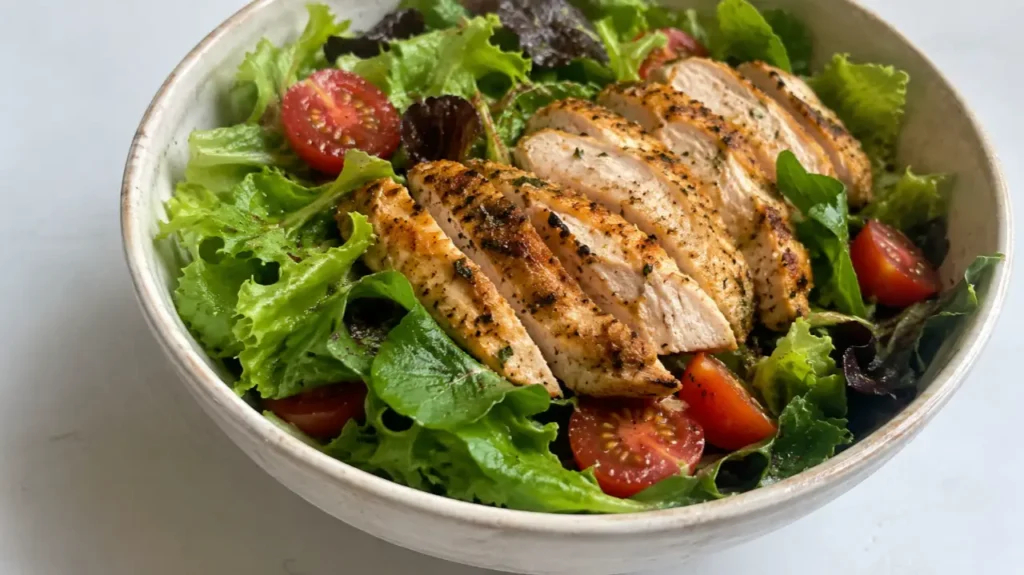
These nine high protein salads are built differently from the start. Each one is centered on a real, substantial protein source, including chicken, salmon, shrimp, eggs, lentils, chickpeas, tofu, turkey, or Greek yogurt, so the salad isn’t an afterthought dressed in vegetables. It’s a full meal that happens to be a salad.
They’re also designed for real kitchens and real schedules. Every recipe here uses ingredients you can find at a normal grocery store, comes together in under 30 minutes, and holds up well when packed into a container for tomorrow’s lunch. A few actually taste better the next day, which makes them some of the most reliable options you can put into a weekly meal prep rotation.
Table of Contents
What You’ll Get
Nine complete high protein salads, each with a full ingredient list and clear, numbered instructions. Between them you’ll find poultry, seafood, eggs, dairy, and two fully plant based options, so no matter what you’re in the mood for, or what you’re avoiding, there’s something on this list that fits.
None of these recipes require special equipment, unusual ingredients, or advanced cooking skills. If you can boil water, roast a vegetable, or use a skillet on the stove, you can make every recipe below.
What Actually Makes a Salad High in Protein
Not every salad marketed as protein packed earns the label. A sprinkle of chickpeas on top of a mostly lettuce bowl adds some protein, but it may not be enough to turn the salad into a substantial meal. The salads that work well as a full meal tend to share a few things in common, and it’s worth understanding them so you can build your own high protein salads later, not just follow these nine.
The protein is the main event, not a garnish. In every recipe here, the protein source makes up a real portion of the bowl, usually somewhere between four and six ounces per serving, rather than a token handful scattered on top. That can make the difference between a salad that feels satisfying and one that leaves you hungry again soon after eating.
There’s more than one protein source when possible. A few of these salads layer protein sources on top of each other. The chicken and quinoa salad is a good example. Quinoa contains all nine essential amino acids, although its protein content is lower than many animal protein sources, so pairing it with chicken creates a more substantial protein rich meal.
Healthy fats are part of the meal, not just added for flavor. Olive oil, avocado, nuts, and seeds provide unsaturated fats that can contribute to a satisfying meal. That’s why several recipes below lean on these ingredients rather than relying on a very light dressing.
Texture matters as much as nutrition. A salad that’s all soft ingredients, such as canned beans, soft cheese, or wilted greens, can feel less satisfying regardless of its protein content. Crunch from toasted nuts, raw vegetables, or crisp lettuce adds contrast and can make the meal more enjoyable and substantial.
Ingredient Guidance: Getting the Best Results
A few small choices make a noticeable difference in how these salads turn out, especially if you’re planning to make them regularly.
Cook proteins in batches. Chicken breast, hard boiled eggs, and cooked lentils can generally keep well in the refrigerator for three to four days when handled and stored properly. That means you can prepare a batch and build different salads from it throughout the week. This can be a useful time saver for anyone trying to make meal prep easier.
Buy pre washed greens when you can, but check the bag date. Bagged greens are convenient, but they can lose crispness quickly. If a recipe calls for a large volume of greens, buying a head of romaine or a bunch of spinach and washing it yourself can give you a fresher result.
Toast your nuts and seeds when you can. It takes only a few minutes in a dry skillet and can make a noticeable difference in flavor. Untoasted nuts can taste flatter compared with toasted nuts, and the extra step is worth the short amount of time it takes.
Season in layers, not all at once. Salt the protein while it cooks, season the dressing separately, and taste the finished salad before serving. Building seasoning in stages can help avoid an under seasoned salad or one that is too salty.
The 9 High Protein Salads
1. Chicken, Quinoa and Avocado Salad
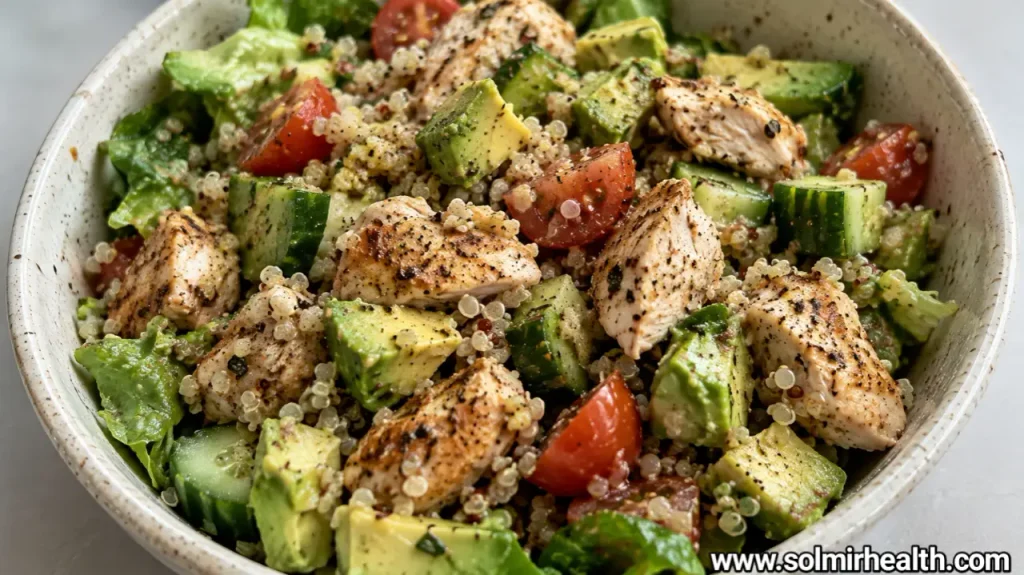
This is the workhorse of the group, and the one worth learning first if you’re new to building high protein salads. Quinoa adds another source of protein alongside the chicken, and the combination makes a substantial meal that can work well for lunch. It’s also one of the more forgiving recipes here because the ratios are flexible, and it holds up well as leftovers.
Ingredients
2 cups cooked quinoa, cooled
2 cups cooked, shredded or diced chicken breast
1 avocado, diced
1 cup cherry tomatoes, halved
½ cup cucumber, diced
¼ cup red onion, finely diced
¼ cup fresh cilantro or parsley, chopped
3 tablespoons olive oil
2 tablespoons lime juice
1 small garlic clove, minced
Salt and black pepper, to taste
How To Make Chicken, Quinoa and Avocado Salad
- Rinse and cook the quinoa according to package directions, then spread it on a plate or sheet pan to cool completely. Warm quinoa can soften the avocado and make the salad mushy.
- In a large bowl, combine the cooled quinoa, chicken, cherry tomatoes, cucumber, and red onion.
- In a small bowl, whisk together the olive oil, lime juice, garlic, salt, and pepper.
- Pour the dressing over the salad and toss gently to combine.
- Fold in the avocado and cilantro last, tossing just enough to distribute them without mashing the avocado.
- Taste and adjust salt, pepper, or lime juice as needed. Serve right away, or store without the avocado and add it fresh before eating.
A quick note for meal prep: this salad keeps well for several days when stored properly if you leave the avocado out and add it fresh before eating. Cut avocado browns and loses its texture sooner than the other ingredients.
2. Chickpea, Feta and Cucumber Salad
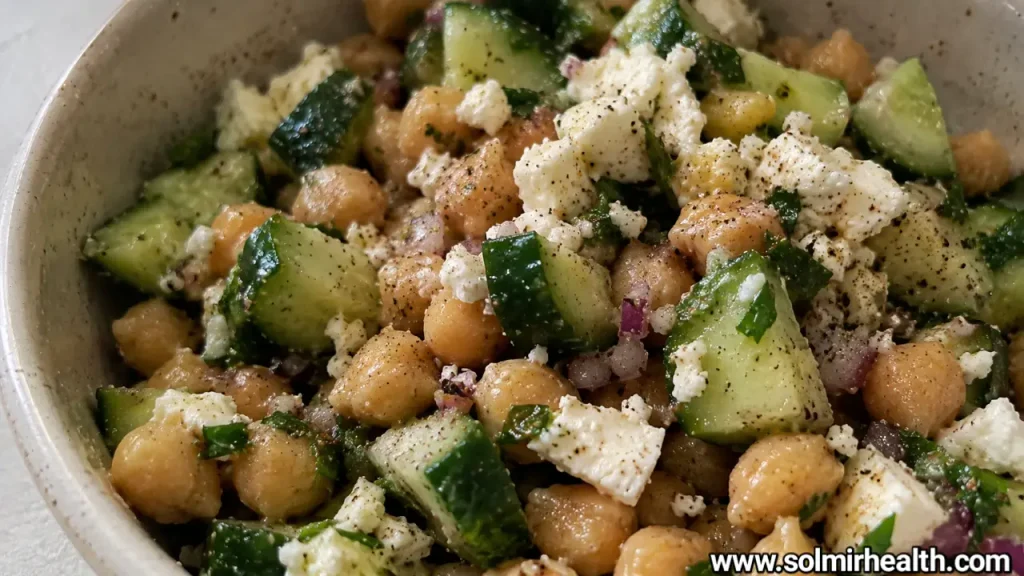
This fully vegetarian option leans on chickpeas and feta for staying power, and it’s closer to a Mediterranean style side than a delicate leafy salad. That sturdiness is exactly why it works well for meal prep. Unlike a spinach or arugula base, this one does not wilt as quickly, and the flavors can develop after a short time in the refrigerator.
Ingredients
2 cans, 15 ounces each, chickpeas, drained, rinsed, and patted dry
1 English cucumber, diced
1 cup cherry tomatoes, halved
½ cup crumbled feta cheese
¼ cup Kalamata olives, halved
¼ cup red onion, thinly sliced
3 tablespoons olive oil
1 tablespoon red wine vinegar
1 teaspoon dried oregano
Salt and black pepper, to taste
How To Make Chickpea, Feta and Cucumber Salad
- Combine the chickpeas, cucumber, cherry tomatoes, olives, and red onion in a large bowl.
- Whisk the olive oil, red wine vinegar, oregano, salt, and pepper together in a small bowl.
- Pour the dressing over the salad and toss to coat everything evenly.
- Gently fold in the feta so the crumbles stay mostly intact rather than blending into the dressing.
- Let the salad sit for 10 minutes before serving so the chickpeas can absorb some of the dressing. Store covered in the refrigerator and use within several days.
If you want a slightly higher protein count, add a soft boiled egg on top just before serving. It’s a small addition that can turn this from a satisfying side into a more complete lunch.
3. Salmon, Arugula and Walnut Salad
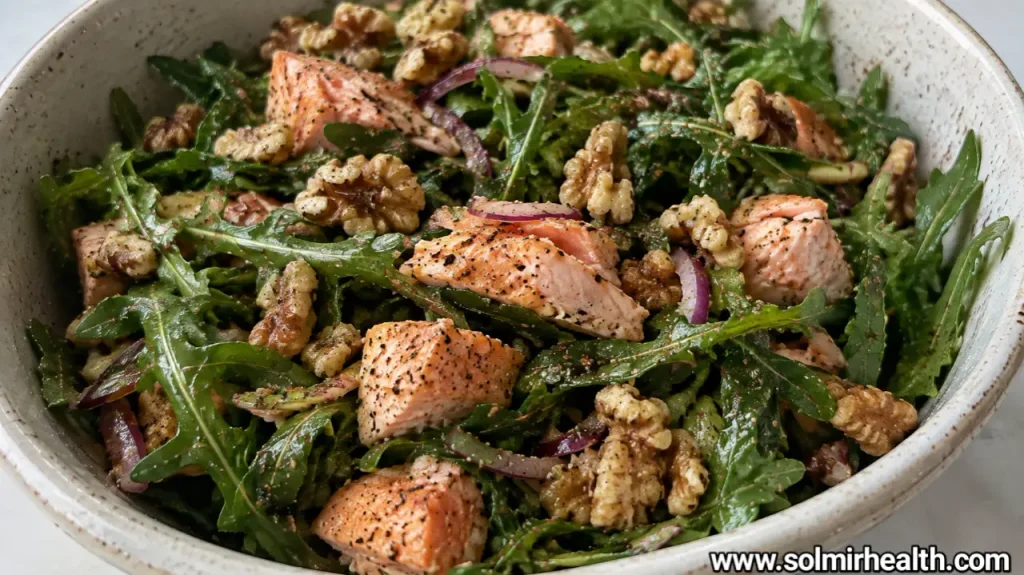
This is the pick for anyone who wants a restaurant style salad without leaving the house. Warm, flaked salmon over peppery arugula with toasted walnuts is a simple combination, but the contrast between the rich fish, the sharp greens, and the crunchy nuts makes it feel like far more than the sum of its parts. Salmon is also a useful source of omega 3 fatty acids, making it a nutrient rich addition to a weekday meal.
Ingredients
2 salmon fillets, about 6 ounces each
5 cups baby arugula
⅓ cup walnuts, roughly chopped
¼ cup shaved Parmesan
1 tablespoon olive oil, for cooking the salmon
3 tablespoons olive oil, for the dressing
1 tablespoon lemon juice
1 teaspoon Dijon mustard
Salt and black pepper, to taste
How To Make Salmon, Arugula and Walnut Salad
- Pat the salmon dry and season both sides with salt and pepper.
- Heat 1 tablespoon of olive oil in a skillet over medium high heat. Cook the salmon skin side down for about 4 to 5 minutes, then flip and continue cooking until the salmon reaches a safe internal temperature of 145°F and flakes easily with a fork.
- While the salmon cooks, toast the walnuts in a dry pan over medium heat for 2 to 3 minutes, stirring often, until fragrant. Set aside to cool.
- Whisk together the 3 tablespoons olive oil, lemon juice, Dijon mustard, salt, and pepper.
- Toss the arugula with the dressing in a large bowl, then divide it between plates.
- Flake the salmon into large pieces and place it over the arugula. Top with the toasted walnuts and shaved Parmesan.
This salad is best eaten the day it’s made. Arugula wilts quickly once dressed, and reheated salmon can lose some of its texture. If you’re prepping ahead, cook the salmon and store it separately, then assemble just before eating.
4. Egg, Spinach and Tomato Salad
The fastest recipe on this list, ready in about 6 minutes if your eggs are already boiled. It’s a strong option for a quick breakfast for lunch moment when you want something substantial without spending much time in the kitchen, and it’s proof that a high protein salad doesn’t need to be complicated.
Ingredients
4 hard boiled eggs, peeled and quartered
4 cups baby spinach
1 cup cherry tomatoes, halved
¼ cup red onion, thinly sliced
2 tablespoons olive oil
1 tablespoon balsamic vinegar
½ teaspoon Dijon mustard
Salt and black pepper, to taste
How To Make Egg, Spinach and Tomato Salad
- Whisk together the olive oil, balsamic vinegar, Dijon mustard, salt, and pepper in a small bowl.
- Toss the spinach, cherry tomatoes, and red onion with the dressing in a large bowl.
- Divide the dressed spinach between plates or containers.
- Top each portion with the quartered eggs and a final pinch of salt and pepper.
- Serve immediately for the best texture, since spinach softens quickly once dressed.
If you’re prepping this for the next day, keep the eggs and dressing separate from the spinach and combine everything right before eating. It only takes an extra minute and helps keep the greens from turning soggy overnight.
5. Lentil and Roasted Veggie Salad
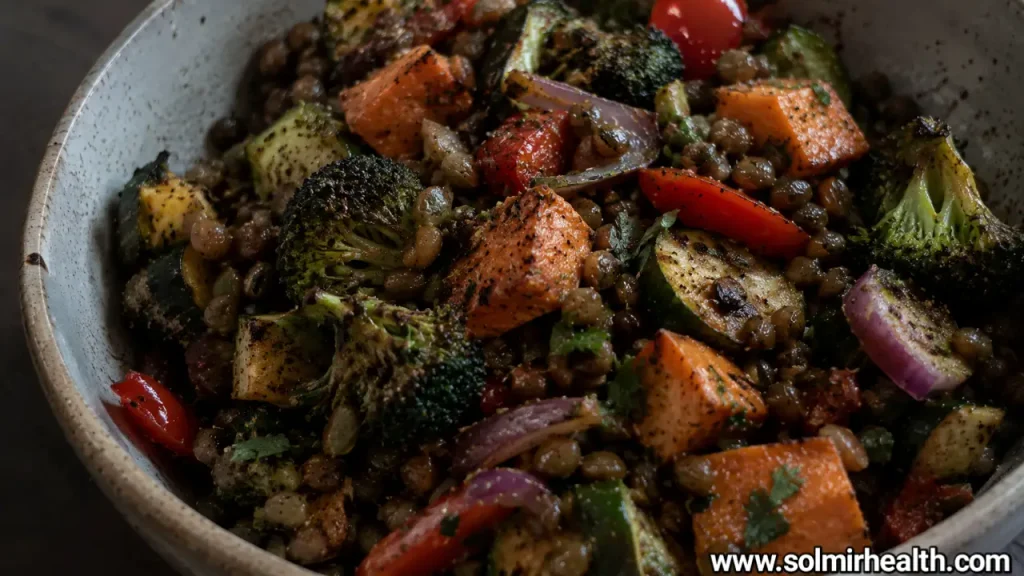
Lentils bring fiber, plant protein, and carbohydrates to the table, which makes this one of the more satisfying options on this list even though it’s entirely plant based. Roasting the vegetables first, rather than adding them raw, gives the salad more depth of flavor instead of leaving it one note.
Ingredients
1 ½ cups cooked green or brown lentils
1 small zucchini, diced
1 red bell pepper, diced
1 small red onion, cut into wedges
2 tablespoons olive oil, divided
3 tablespoons olive oil, for the dressing
1 tablespoon red wine vinegar
½ teaspoon ground cumin
2 cups arugula or baby spinach
Salt and black pepper, to taste
How To Make Lentil and Roasted Veggie Salad
- Preheat the oven to 425°F. Toss the zucchini, bell pepper, and red onion with 2 tablespoons of olive oil, salt, and pepper on a sheet pan.
- Roast for 18 to 20 minutes, stirring halfway through, until the vegetables are tender and lightly browned at the edges.
- While the vegetables roast, whisk together the 3 tablespoons olive oil, red wine vinegar, cumin, salt, and pepper.
- In a large bowl, combine the lentils, roasted vegetables, and arugula.
- Pour the dressing over everything and toss to combine. Serve warm or at room temperature.
This is one of the better make ahead options in the group. The roasted vegetables and lentils hold their texture well over several days, and the flavors can develop overnight, making this a useful choice to prepare in a larger batch.
6. Shrimp, Avocado and Lime Salad
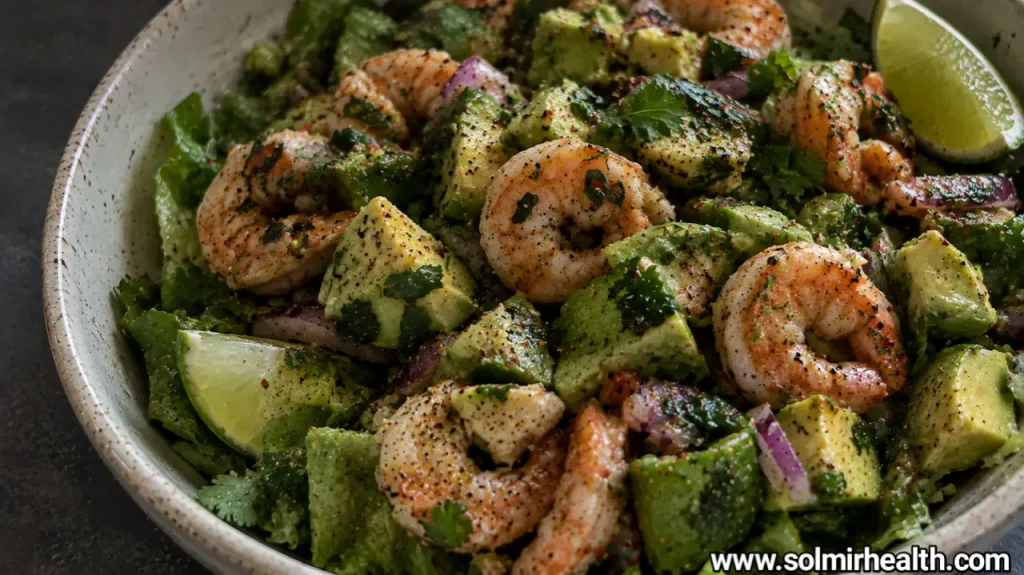
Shrimp cooks in just a few minutes and provides lean protein, so this salad stays light while still being substantial. The lime and avocado keep everything tasting fresh and bright rather than heavy, which makes it a good choice for warmer months or anytime you want something that does not feel like a large meal.
Ingredients
1 pound large shrimp, peeled and deveined
1 tablespoon olive oil, for cooking
1 avocado, diced
1 cup cherry tomatoes, halved
¼ cup red onion, finely diced
¼ cup fresh cilantro, chopped
5 cups romaine lettuce, chopped
3 tablespoons olive oil, for the dressing
2 tablespoons lime juice
½ teaspoon chili powder
Salt, to taste
How To Make Shrimp, Avocado and Lime Salad
- Pat the shrimp dry and toss with chili powder and a pinch of salt.
- Heat 1 tablespoon of olive oil in a skillet over medium high heat. Cook the shrimp for about 2 minutes per side, or until they are opaque and reach a safe internal temperature of 145°F. Remove from the heat.
- Whisk together the 3 tablespoons olive oil, lime juice, and salt for the dressing.
- Toss the romaine with the dressing in a large bowl, then divide between plates.
- Top with the cooked shrimp, avocado, cherry tomatoes, red onion, and cilantro.
Shrimp can overcook quickly, so keep a close eye on it while cooking. Remove it from the heat once it is opaque and has reached a safe internal temperature.
7. Tofu, Edamame and Sesame Salad
A fully vegan option that still delivers a strong protein combination, since both tofu and edamame are soy based complete proteins. Pressing the tofu well before cooking is the one step that makes a big difference between a salad with soft, bland tofu and one where the tofu actually browns and holds its shape.
Ingredients
14 ounces firm tofu, pressed and cubed
1 cup shelled edamame, cooked
1 cup shredded purple cabbage
1 carrot, shredded
2 green onions, sliced
1 tablespoon sesame oil, for cooking
2 tablespoons soy sauce
1 tablespoon rice vinegar
1 teaspoon maple syrup
1 teaspoon sesame seeds
1 tablespoon neutral oil, such as avocado or vegetable oil
How To Make Tofu, Edamame and Sesame Salad
- Press the tofu between paper towels for 15 minutes to remove excess water, then cut it into cubes.
- Heat the neutral oil in a skillet over medium high heat. Cook the tofu for 6 to 8 minutes, turning occasionally, until golden on most sides.
- Whisk together the sesame oil, soy sauce, rice vinegar, and maple syrup in a small bowl.
- In a large bowl, combine the cabbage, carrot, and edamame.
- Add the tofu and dressing, then toss gently to coat.
- Top with green onions and sesame seeds before serving.
If you’re short on time, frozen shelled edamame works well instead of fresh. Simply cook it according to the package directions and drain before adding it to the bowl.
8. Turkey, Cranberry and Almond Salad
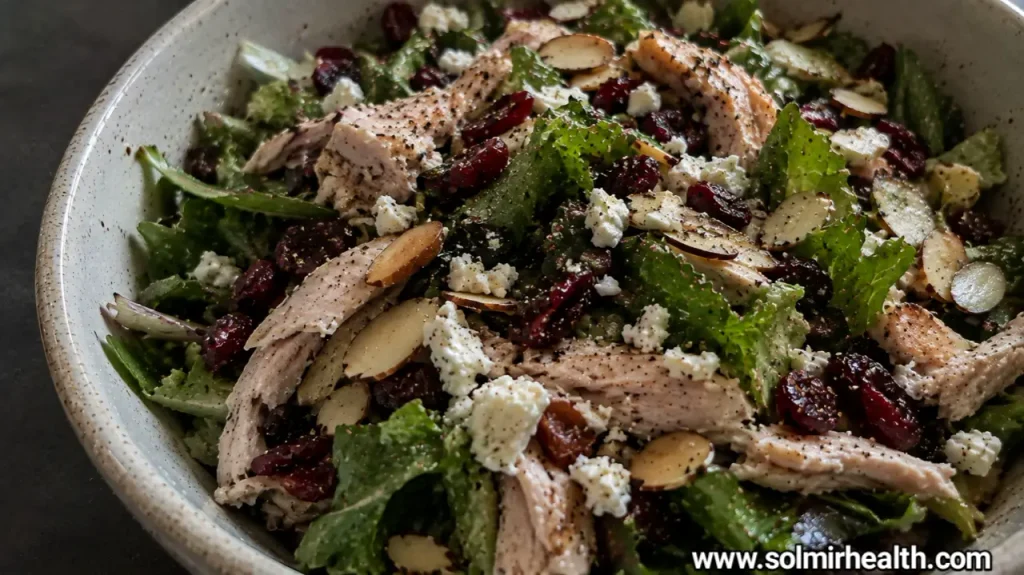
This salad has a slightly sweeter, autumn leaning profile, but it genuinely works year round. Dried cranberries and toasted almonds add sweetness and crunch that contrasts nicely with the lean turkey, making this one of the more crave worthy options on the list without relying on a heavy dressing.
Ingredients
2 cups cooked, diced turkey breast
5 cups mixed greens
⅓ cup dried cranberries
⅓ cup sliced almonds
¼ cup crumbled goat cheese, optional
3 tablespoons olive oil
1 tablespoon apple cider vinegar
1 teaspoon Dijon mustard
½ teaspoon honey
Salt and black pepper, to taste
How To Make Turkey, Cranberry and Almond Salad
- Toast the sliced almonds in a dry skillet over medium heat for 2 to 3 minutes, stirring often, until golden. Set aside to cool.
- Whisk together the olive oil, apple cider vinegar, Dijon mustard, honey, salt, and pepper.
- In a large bowl, toss the mixed greens with the dressing.
- Divide the greens between plates and top with the turkey, cranberries, toasted almonds, and goat cheese if using.
Cooked chicken works as a straightforward substitute if you do not have leftover turkey on hand, and the flavor profile works well either way.
9. Greek Yogurt Chicken Salad
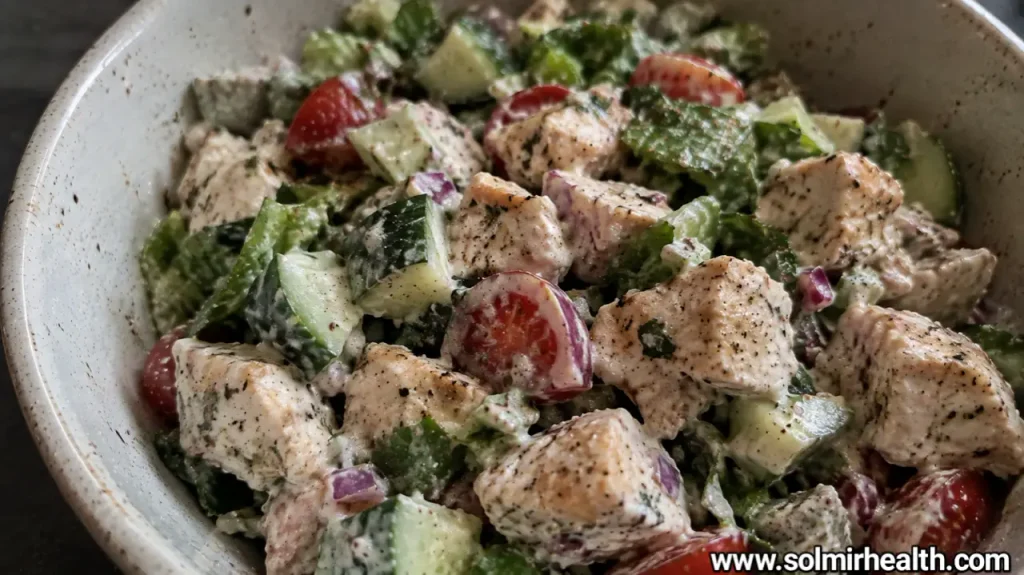
A creamy, protein forward twist on classic chicken salad. Swapping mayonnaise for Greek yogurt adds protein while creating a lighter, tangy dressing, and it works just as well scooped onto a bed of greens as it does stuffed into a pita or wrapped in a tortilla.
Ingredients
2 cups cooked, diced chicken breast
¾ cup plain Greek yogurt
1 celery stalk, finely diced
¼ cup red onion, finely diced
1 tablespoon lemon juice
1 teaspoon Dijon mustard
¼ cup fresh dill, chopped
Salt and black pepper, to taste
4 cups mixed greens, for serving
How To Make Greek Yogurt Chicken Salad
- In a large bowl, stir together the Greek yogurt, lemon juice, Dijon mustard, salt, and pepper until smooth.
- Add the chicken, celery, and red onion, folding until everything is evenly coated.
- Stir in the fresh dill.
- Cover and refrigerate for at least 20 minutes to let the flavors come together. This also allows the dressing to thicken slightly.
- Serve over a bed of mixed greens, or in a wrap or pita.
This is one of the sturdier options in the group and can be stored in the refrigerator for several days when handled properly, making it an easy one to prepare ahead for the week.
Storage and Meal Prep Tips
Most of these salads store well for three to four days when kept properly in an airtight container in the refrigerator, but a few small habits make a real difference in quality.
Keep dressings separate when possible. Any salad built on a leafy green base, including arugula, spinach, or mixed greens, will hold up far better if the dressing is stored in a separate small container and added right before eating. The sturdier grain and legume based salads, like the chickpea or lentil options, can be dressed ahead of time without as much loss in texture.
Add delicate ingredients last. Avocado, fresh herbs, and toasted nuts can lose quality if they sit dressed in the refrigerator for days. Prep them separately and add them just before serving to keep their texture and flavor intact.
Don’t freeze these salads. Freezing can work well for the proteins on their own, such as cooked chicken, turkey, or lentils, but fresh vegetables in these recipes can become watery after thawing. If you want to get ahead, freeze the protein component only and thaw it before assembling the salad fresh.
Variations and Substitutions
These recipes are meant to be a starting point rather than a fixed formula. A few easy swaps:
Chicken breast can often be replaced with rotisserie chicken, canned tuna, or firm tofu, depending on what you have on hand or what you’re avoiding.
Quinoa can generally be swapped for farro, brown rice, or cooked lentils in recipes where it is used as a base grain.
If you don’t eat dairy, the feta, Parmesan, and goat cheese in these recipes can simply be left out or replaced with a small handful of extra nuts or seeds for texture.
For a lower carbohydrate version of any recipe that includes grains, reduce the quinoa, farro, or rice and add extra greens or roasted vegetables to fill out the bowl.
Final Thoughts
None of these salads rely on a special ingredient or a complicated technique. The protein provides the foundation for a satisfying meal, and everything else in each recipe is built to support that. Keep two or three of these on rotation for your weekly meal prep, and you’ll always have something in the refrigerator that can carry you through the afternoon, not just something that looks like a salad.